A faster payment rail is no longer the strategic finish line. It is the starting point.
The 16 September 2026 announcement that Pidgin partnered with Millennium Corporate Credit Union to give nearly 300 Midwest credit unions access to FedNow, RTP and stablecoin payment rails through one connection is significant for more than its distribution reach. It points to a structural shift in payments infrastructure.
The competitive question is moving from “Which rail do we connect to?” to “How intelligently can we control all the rails?”
That is the control-plane race.
From rail ownership to payment orchestration
FedNow and RTP have made always-on, near-real-time payments increasingly accessible to US financial institutions. The Federal Reserve describes FedNow as a 24x7x365 service supporting near-real-time clearing and settlement. The RTP Network provides another always-available option for instant payments, with support for high-value transactions and rich ISO 20022 messaging.
Stablecoin rails add a different capability set, including programmable settlement and potential cross-border utility. They also introduce different compliance, liquidity, custody and operational considerations.
These rails are not identical. However, for many businesses and financial institutions, their existence creates a common management problem: how to select, govern, fund, monitor and reconcile transactions across multiple systems.
That is the job of a control plane.
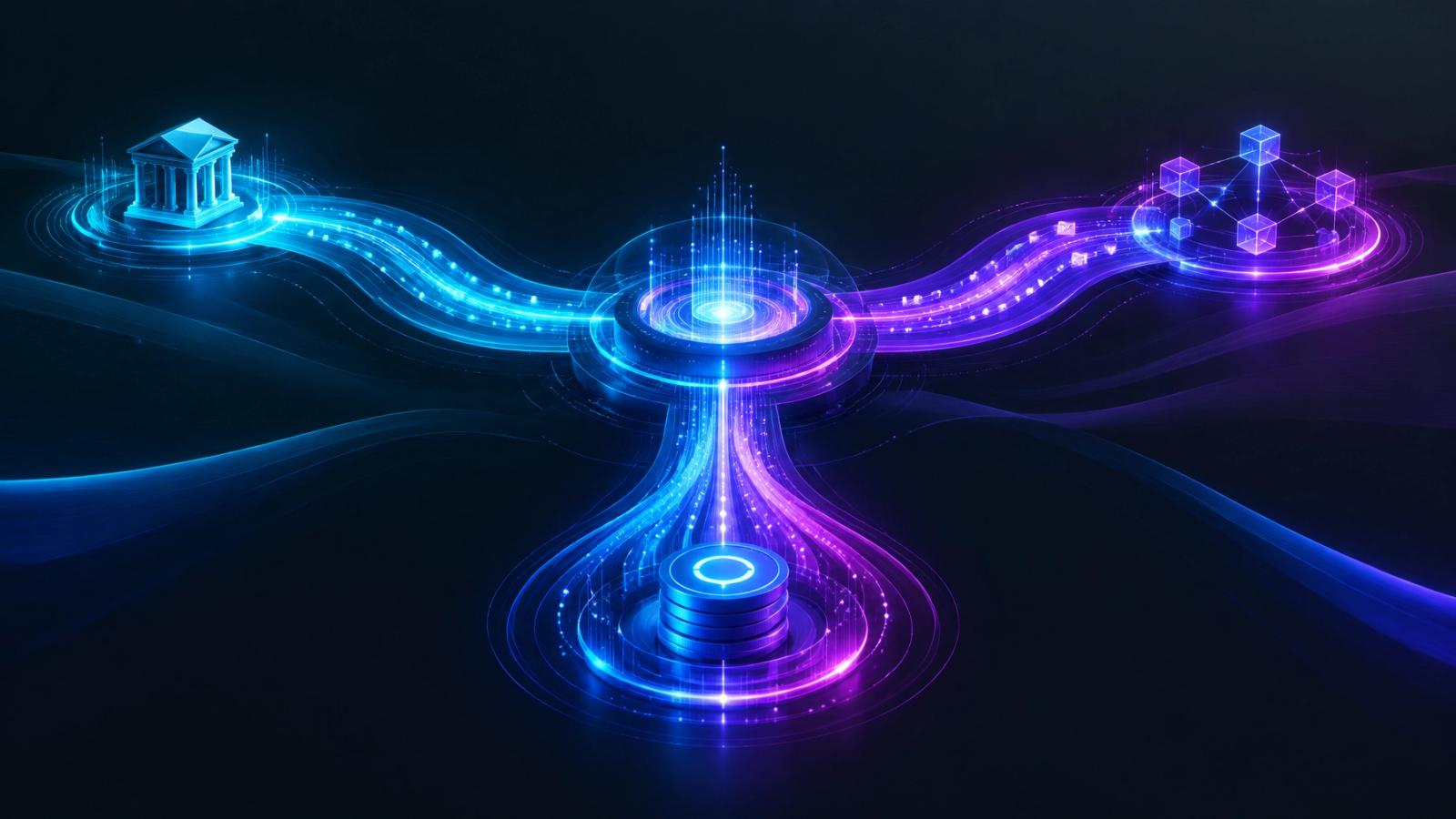
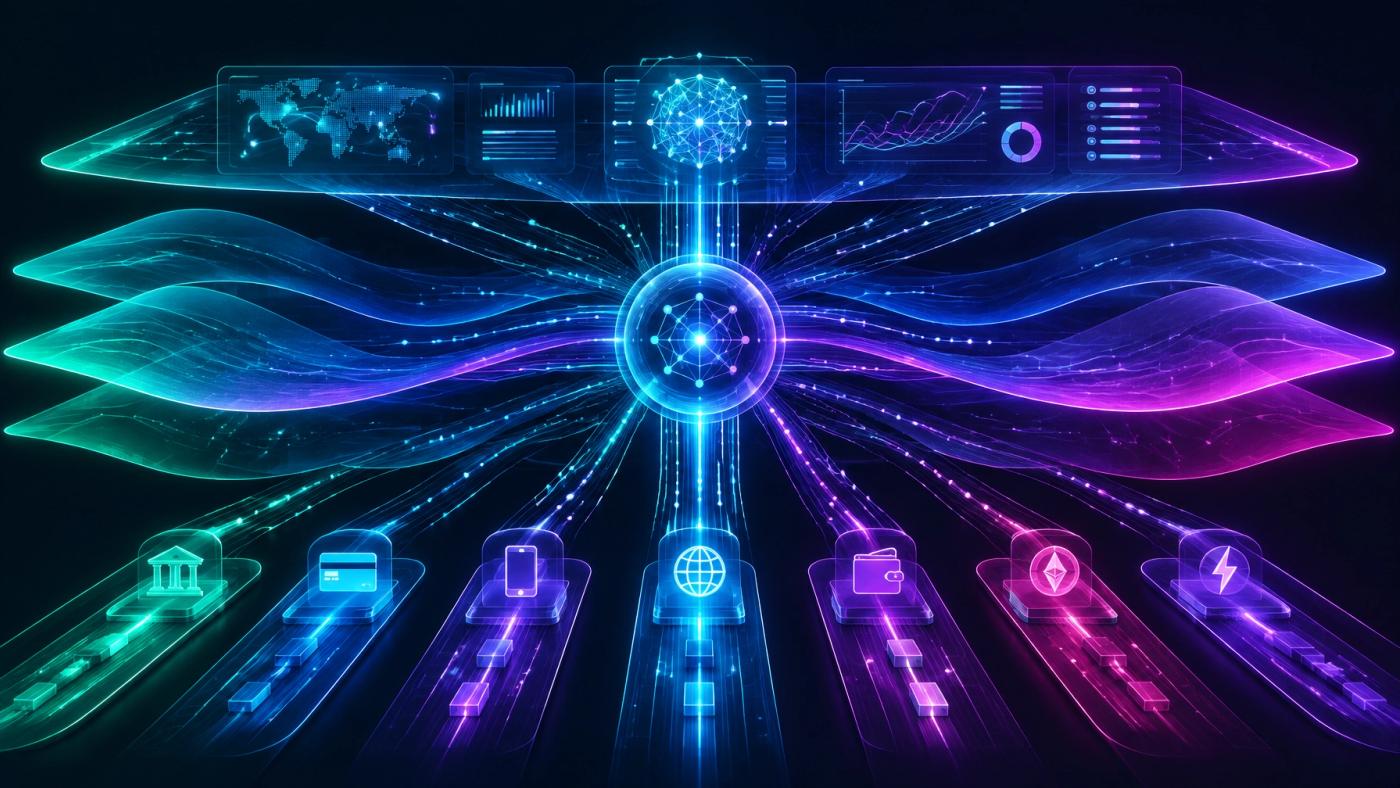
A payment control plane sits above individual rails. It applies business rules, risk controls and routing logic before execution, then maintains a consistent view of what happened afterwards. It connects payment channels, financial accounts, ledgers, customer experiences and operational workflows.
The rail moves the money. The control plane decides how the payment should move.
Why the Pidgin and Millennium partnership matters
According to FinTech Global’s report, the partnership gives nearly 300 Millennium member credit unions a route to FedNow, RTP and stablecoin rails through a single platform. Pidgin’s broader network reaches more than 1,000 community financial institutions, while the partnership reduces the need for each institution to manage separate rail integrations.
The announcement also arrives amid significant reported industry adoption. FinTech Global reports that nearly 1,700 financial institutions participate in FedNow and more than 1,100 connect to RTP. These figures should be treated as reported industry figures rather than a direct comparison of equivalent participation measures. The Clearing House separately lists more than 1,357 RTP participants as of August 2026.
The strategic takeaway is not simply that more institutions can send instant payments. It is that access is becoming less differentiated.
When connectivity is available through an intermediary or platform, the value migrates upwards. Financial institutions compete on:
The quality of their routing and payment policies
The reliability of their risk and fraud controls
The efficiency of their liquidity management
The usefulness of their payment data
The speed and accuracy of reconciliation
The experiences they create for members, merchants and corporate customers
This is a familiar pattern in technology markets. Infrastructure becomes easier to access, and the advantage moves to orchestration.
What a control plane must manage
For merchants, treasury teams and financial institutions, the control plane is not an abstract architecture layer. It directly affects economics and operational performance.
Payment success rate
A transaction should not be routed based only on whether a rail is available. The decision may depend on the payer’s account, the recipient’s institution, the transaction amount, the use case, risk signals, service availability and required settlement timing.
A rules-based or AI-assisted routing engine can evaluate those variables and select the most appropriate path. The objective is not to favour one rail. It is to improve the likelihood that a legitimate payment completes on the first attempt.
That can reduce avoidable declines, manual intervention and customer frustration.
Cost and speed
The fastest rail is not automatically the lowest-cost or most suitable rail. A control plane can compare the commercial and operational cost of available routes against the value of speed.
For example, a low-value customer payment may justify instant settlement, while a scheduled supplier payment may be better suited to another method. The correct decision depends on the merchant’s margin, service-level commitments and cash-flow requirements.
Liquidity
Instant payments compress the time between instruction and settlement. That is valuable, but it can expose weak liquidity processes.
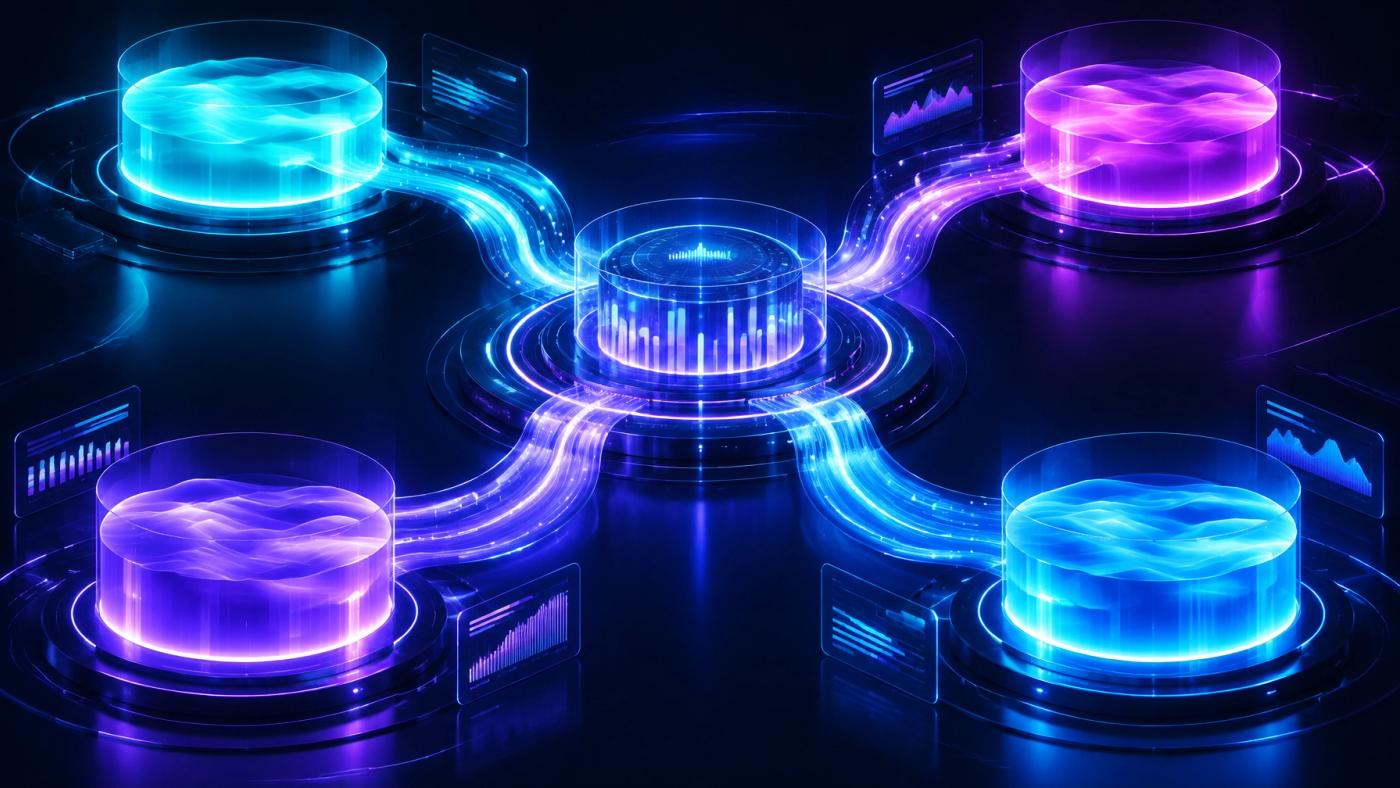
Treasury teams need visibility across prefunded accounts, settlement positions, operating balances and intraday requirements. The FedNow overview specifically references liquidity management transfer capabilities. A control plane can help organisations connect payment decisions with funding policies, rather than treating liquidity as a separate back-office concern.
Risk and irrevocability
Instant payments leave less time to identify mistakes or suspicious activity before funds settle. Controls must move upstream.
That means screening, velocity checks, limits, approval policies, payer authentication and account validation need to be applied before execution. Post-transaction monitoring still matters, but it cannot be the only line of defence when settlement is immediate.
Stablecoin rails add their own considerations, including wallet controls, asset exposure, network selection and regulatory obligations. A multi-rail design should make these differences visible rather than hiding them behind a generic API.
ISO 20022 data and reconciliation
Speed without usable data simply moves operational pain faster.
RTP supports rich ISO 20022 data, which can improve payment context and support more precise reconciliation. The opportunity is to carry relevant remittance information from initiation through settlement, ledger posting and reporting.
For a complex omnichannel business, this means a payment taken online, in a shop, through a kiosk or inside an embedded workflow can be connected to the right order, customer, invoice, inventory movement and settlement record.
The result is not just faster money movement. It is a more complete operational record.
What this means for merchants and omnichannel operators
A retailer, marketplace, logistics business or enterprise may have several payment environments operating at once:
Online checkout and pay-by-link
Traditional terminals and SoftPOS
Tap-and-pay kiosks
Embedded payment experiences
Subscription billing and payouts
Supplier, warehouse and reconciliation workflows
Each channel can create its own payment data, exceptions and settlement timing. A control plane provides a common decision layer across those journeys.
That is why payment orchestration should not be viewed only as a gateway feature. It is increasingly an operating model for commerce.
Quantum Payments’ platform is designed as an all-in-one, modular system spanning payment orchestration, online and in-person payments, embedded payments, accounting, asset and warehouse management, omnichannel sales and business intelligence. The platform can help businesses connect payment activity with broader operational workflows, without requiring every organisation to build a control plane from scratch.
Quantum Payments does not claim to operate FedNow or RTP. The relevant principle is platform-level: businesses need a flexible architecture that can coordinate payment methods and operational data as their requirements evolve.
For a deeper view of always-on treasury architecture, see The First Corporate Payment: SWIFT, Ledger and Siemens’ Always-On Treasury. For the build-versus-buy decision, read Rent vs Build: Is Your Payment Infrastructure Too Important to Outsource?.
Merchant and operator checklist
Before adding another payment rail, ask:
Use case: Which customer or operational problem will this rail solve?
Routing: What rules determine the preferred route, and when should another route be used?
Success: Are we measuring approval and completion rates by channel, customer segment and payment method?
Cost: Do we understand the total cost of each route, including exceptions, returns and reconciliation?
Liquidity: Can treasury see funding requirements across all settlement accounts?
Risk: Are fraud, compliance, limits and approval controls applied before execution?
Data: Does ISO 20022 or equivalent payment data reach the ledger and reporting systems?
Reconciliation: Can finance match payments, orders, invoices, refunds and settlements automatically?
Resilience: What happens when a provider, rail or downstream system is unavailable?
Governance: Can we explain why a payment was routed in a particular way?
If the answer to several of these questions is “not yet”, adding another rail may increase complexity faster than it increases capability.
Frequently asked questions
What is a payment control plane?
A payment control plane is the orchestration and decision layer above payment rails. It manages routing, risk, approvals, liquidity, timing, exceptions and reconciliation across multiple payment methods.
Why are FedNow and RTP not enough on their own?
FedNow and RTP provide important instant-payment infrastructure, but a rail does not automatically manage a business’s customer experience, liquidity policies, ledger integration or cross-channel reconciliation. Those responsibilities sit above the rail.
What does the Pidgin and Millennium partnership enable?
The partnership gives nearly 300 Midwest credit unions a route to FedNow, RTP and stablecoin rails through one connection, according to FinTech Global. It illustrates how platform access can simplify multi-rail adoption.
How can AI improve payment routing?
AI can analyse historical outcomes, transaction context, availability, risk indicators and cost signals to recommend or execute routing decisions within defined policies. It should operate with clear controls, monitoring and human governance.
Why does reconciliation matter in instant payments?
Instant settlement does not guarantee instant accounting. Strong reconciliation connects payment events with orders, customers, invoices, refunds and settlement records so finance and operations have an accurate view of cash.
The strategic conclusion
The instant payments race was about building faster ways to move money. The next race is about making those ways work together.
For financial institutions, the winners will not necessarily be those with access to the most rails. They will be the organisations that can manage choice without creating fragmentation.
For merchants and complex omnichannel businesses, the priority is similar: one coherent operating view across checkout, settlement, liquidity, risk, accounting and intelligence.
The rail is the pathway. The control plane is where competitive advantage is now being built.
This article is general information only. It isn't financial, legal or tax advice, so check how it applies to your business before you act on it. See how we research and check our articles in our editorial standards.