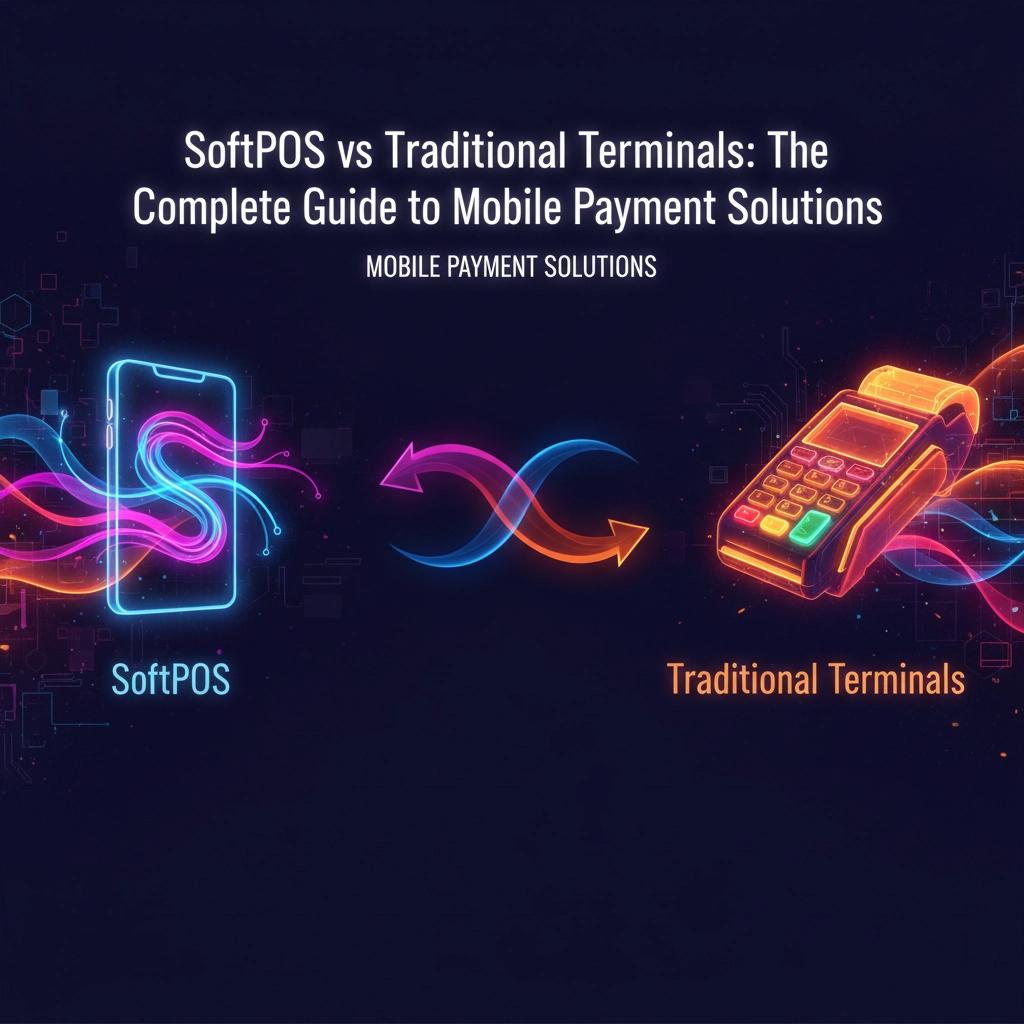
The payments landscape is experiencing a seismic shift. While traditional payment terminals have dominated retail floors for decades, SoftPOS technology is revolutionising how Australian businesses accept payments. This comprehensive guide breaks down everything you need to know about both solutions to help you make the right choice for your business.
Understanding SoftPOS Technology
SoftPOS (Software Point of Sale) transforms ordinary smartphones and tablets into fully functional payment terminals. Instead of requiring dedicated hardware, businesses can accept contactless card payments, mobile wallets, and tap-to-pay transactions directly through an app installed on compatible Android or iOS devices.
The technology leverages Near Field Communication (NFC) capabilities already built into most modern smartphones. When a customer taps their card or mobile wallet on the merchant's device, the SoftPOS app securely processes the transaction through encrypted cloud-based systems, meeting the same security standards as traditional terminals.
This approach eliminates the need for separate card readers, PIN pads, or receipt printers: everything happens through one device that most business owners already carry in their pocket.
Understanding Traditional Payment Terminals
Traditional POS terminals are the standalone devices you've seen in shops across Australia for years. These dedicated units typically include a card reader, display screen, keypad, and often a built-in receipt printer. They connect to payment networks through ethernet cables, phone lines, or mobile connections.
These systems are designed as purpose-built payment processing devices with robust hardware engineered specifically for high-volume transaction environments. They support multiple payment methods, including chip cards, magnetic stripe cards, contactless payments, and cash transactions when integrated with a complete POS system.
The Head-to-Head Comparison
Setup and Implementation
SoftPOS wins on speed: Getting started takes minutes. Download the app, complete the verification process, and you're ready to accept payments. There's no waiting for hardware delivery or technician visits.
Traditional terminals require hardware procurement, installation, and configuration. This process typically takes days or weeks, depending on your provider and location. You'll need to organise installation, testing, and staff training before going live.
Mobility and Flexibility
Here's where SoftPOS truly shines. Complete mobility means you can accept payments anywhere: at customer tables, pop-up locations, delivery addresses, or while providing mobile services. Your payment terminal travels with you.
Traditional terminals are generally fixed-location devices. While portable options exist, they're bulkier and require charging stations, making true mobility challenging.
Cost Considerations
SoftPOS offers significant upfront savings. Since you're using existing smartphone or tablet hardware, there's no terminal purchase or lease costs. Monthly fees are typically lower, and you avoid maintenance and replacement expenses.
Traditional terminals involve higher initial investment. Hardware costs range from hundreds to thousands of dollars per terminal, plus ongoing maintenance, replacement, and upgrade expenses. However, transaction processing fees might be slightly lower for high-volume merchants.
Android SoftPOS on Everyday Devices: Big Savings, Full Compliance
A major advantage of SoftPOS is its ability to run natively on Android devices that are far more affordable than traditional PCI DSS-certified payment terminals. For many SMEs, this means you can start taking contactless payments using devices you already own—without locking into costly terminal leases.
Supported Android device types:
Standard Android smartphones with NFC (Android 10+ recommended)
Android tablets with NFC for countertop, kiosk, or queue-busting setups
Ruggedised Android handhelds for warehouses, delivery, and field service
Shared or BYOD staff devices managed via MDM/EMM policies
How security works without specialised hardware:
PCI DSS requirements are met through a PCI MPoC-compliant SoftPOS app model, with strict controls and audits
EMV contactless acceptance with tokenisation and end-to-end encryption protects card data
Device integrity checks, cryptographic attestation, and Google Play Protect help prevent tampering
Secure PIN on COTS (where supported by schemes and your provider) or PIN-less limits per scheme rules
Cloud key management, remote wipe, and policy enforcement via MDM keep fleets protected
Real-world impact for SMEs:
Outfit multiple staff with tap-to-pay for the cost of a single traditional terminal—perfect for cafes, food trucks, and busy weekend markets
Enable tradies and on-site services to take payment immediately on completion, cutting invoice delays and chargebacks
Spin up extra “lanes” at pop-ups and events by adding more Android devices on the day—no technician visits required
Equip delivery teams to accept at-the-door payments, improving cash flow and reducing admin
Rapidly roll out new locations or seasonal teams by provisioning tablets or spare phones in minutes
Bottom line: with Android SoftPOS, you get enterprise-grade security and PCI-aligned controls on devices that are a fraction of the cost of dedicated terminals—freeing up capital to invest back into growth.
Transaction Processing Speed
Both solutions process payments quickly, but the user experience differs. SoftPOS typically offers streamlined interactions: customers tap once, and the transaction completes. The merchant handles everything on their device.
Traditional terminals may require multiple steps: card insertion or tap, PIN entry on a separate keypad, receipt selection, and potentially signature capture on different devices.
Security and Compliance
This is crucial for Australian businesses. Both solutions must meet Payment Card Industry Data Security Standards (PCI DSS). SoftPOS apps implement end-to-end encryption and tokenisation, while traditional terminals use hardware-based security modules.
The key difference: SoftPOS security relies on software-based protection and cloud infrastructure, while traditional terminals use dedicated hardware security. Both approaches are equally secure when properly implemented by certified providers.
Ideal Use Cases
When SoftPOS Makes Sense
Mobile and service businesses benefit enormously from SoftPOS. Food trucks, market stalls, delivery drivers, tradespeople, and consultants can accept payments wherever they work. The technology is perfect for:
Pop-up shops and temporary retail locations
Farmers' markets and craft fairs
Home service providers (cleaners, tradies, tutors)
Food delivery and mobile catering
Small retailers wanting to reduce overhead costs
When Traditional Terminals Excel
Fixed-location retailers with high transaction volumes often prefer traditional terminals. The dedicated hardware handles intensive use better and integrates seamlessly with comprehensive POS systems. Consider traditional terminals for:
Busy retail stores processing hundreds of daily transactions
Restaurants needing integration with kitchen display systems
Businesses requiring multiple payment stations
Operations needing cash management and extensive reporting
Environments where device security and theft prevention are concerns
Security Deep Dive
Australian businesses must prioritise payment security. Both solutions offer robust protection, but through different approaches.
SoftPOS security features:
End-to-end encryption from tap to settlement
Device authentication and app-level security
Cloud-based fraud monitoring
Automatic security updates
Transaction tokenisation
Traditional terminal security:
Hardware security modules (HSMs)
Physical tamper detection
Dedicated secure communications
Isolated payment processing environment
Proven security track record
The Australian Competition and Consumer Commission (ACCC) and Australian Securities and Investments Commission (ASIC) recognise both approaches as secure when implemented by compliant providers.
Future-Proofing Your Payment Strategy
The payments industry is evolving rapidly. Digital wallet adoption is accelerating among Australian consumers, with Apple Pay, Google Pay, and Samsung Pay becoming increasingly popular. Both SoftPOS and traditional terminals support these payment methods, but SoftPOS often receives updates faster.
Consider your growth trajectory: SoftPOS scales effortlessly: add new devices instantly without hardware procurement. Traditional systems require additional terminal purchases and setup for expansion.
Making the Right Choice
The decision ultimately depends on your specific business needs:
Choose SoftPOS if you:
Need payment acceptance flexibility and mobility
Want to minimise upfront costs and ongoing expenses
Operate a small to medium business with moderate transaction volumes
Value quick implementation and easy scaling
Don't require extensive POS system integration
Choose Traditional Terminals if you:
Process high transaction volumes in fixed locations
Need integration with comprehensive POS systems
Require multiple peripheral devices (scanners, scales, printers)
Operate in environments where device security is paramount
Prefer dedicated, purpose-built payment hardware
The Verdict
SoftPOS represents the future of payment acceptance for many Australian businesses, offering unprecedented flexibility, cost-effectiveness, and ease of implementation. However, traditional terminals remain the better choice for high-volume, fixed-location operations requiring robust hardware and extensive integration capabilities.
The good news? You don't have to choose just one. Many businesses adopt hybrid approaches: traditional terminals for main locations and SoftPOS for mobile operations or secondary locations.
As payment technology continues evolving, the gap between these solutions will likely narrow. For now, consider your current needs, growth plans, and operational requirements to make the best choice for your business.
Ready to explore payment solutions that fit your business? Discover how Quantum Payments can help you choose the right payment technology for your unique requirements.
This article is general information only. It isn't financial, legal or tax advice, so check how it applies to your business before you act on it. See how we research and check our articles in our editorial standards.